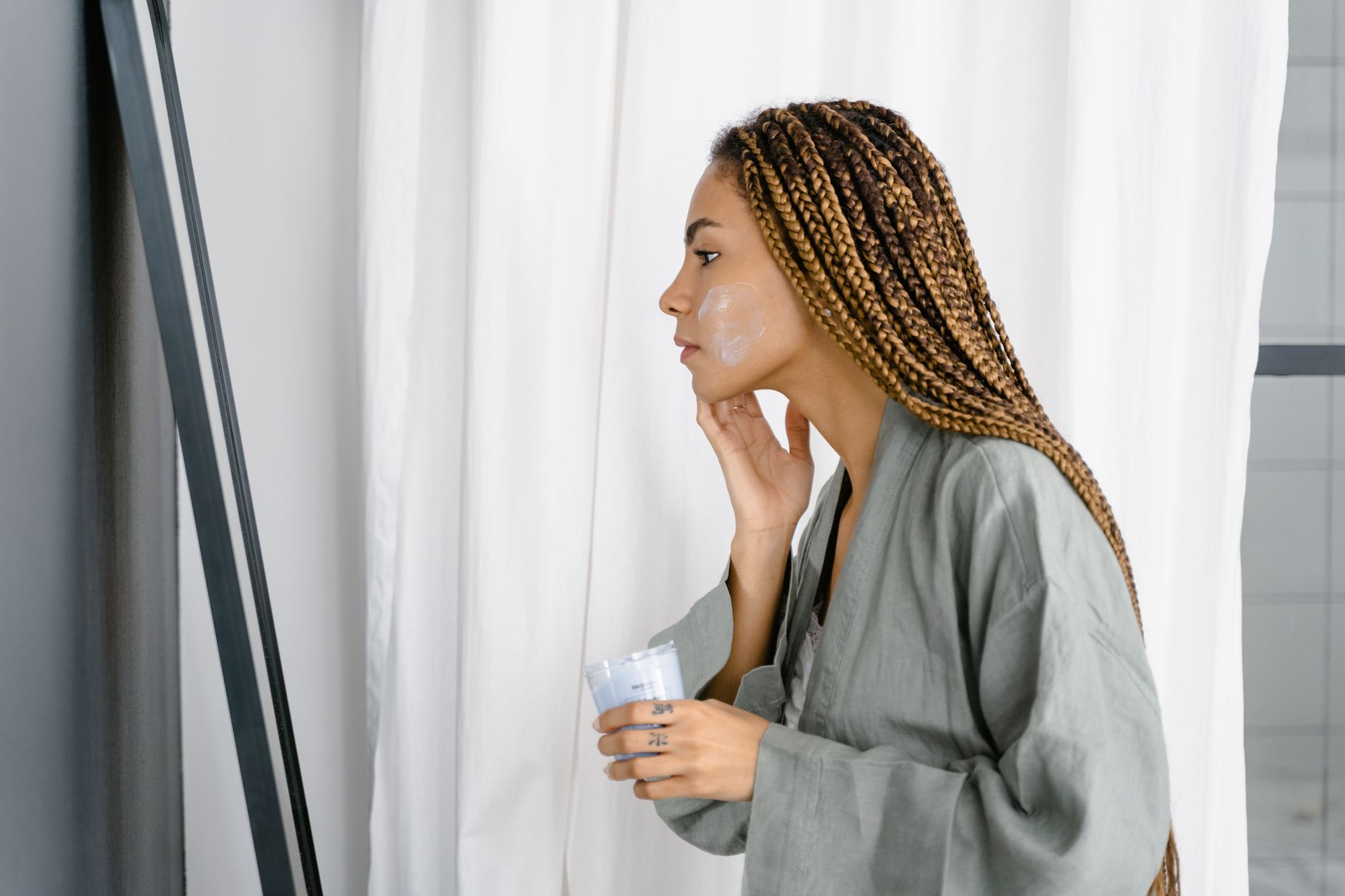
If you want to keep your skin hydrated and glowing all day, the solution isn't buying more products. It's understanding what your skin actually needs at each stage of the day and giving it that, consistently. Dull, tight, or dry skin by mid-afternoon is almost always a sign of a gap in the routine, not a gap in the product collection.
Why skin loses hydration during the day
Skin loses water constantly through a process called transepidermal water loss (TEWL). Wind, air conditioning, low humidity, and sun exposure all speed this up. Cleansers that strip the skin's natural oils make it worse. By the time your face feels tight or looks flat, the moisture deficit has been building for hours.
The fix starts before you leave the house. A good morning routine seals in moisture so the skin has a buffer to work with. But what you do throughout the day matters just as much.
Start with a hydrating base in the morning
After cleansing, apply a hydrating toner or essence while skin is still slightly damp. This isn't a step most people bother with. It should be. Damp skin absorbs water-based actives faster and more evenly than dry skin, and a layer of hyaluronic acid or glycerin at this stage gives the moisturiser something to lock in rather than just sit on top of.
Follow with a moisturiser suited to your skin type. If you're unsure which formula fits best, choosing the right moisturizer for your skin type comes down to matching the texture and key ingredients to what your skin actually does, not what you wish it would do.
Finish with SPF. Every dermatologist says it. UV exposure degrades the skin barrier, which is the structure that keeps water inside. No SPF means no lasting glow, regardless of what's underneath it.
The ingredients that genuinely hydrate
Not all moisturising ingredients work the same way. Understanding the three categories helps you build a routine that works on multiple levels at once.
- Humectants draw water into the skin. Hyaluronic acid, glycerin, and aloe vera fall into this group. They work best when there's moisture in the air or when layered under something occlusive.
- Emollients smooth and soften the skin surface. Squalane, jojoba oil, and shea butter are common examples. They fill the gaps between skin cells and make skin feel soft immediately.
- Occlusives form a seal over the skin to prevent water from escaping. Petrolatum, beeswax, and dimethicone sit in this category. A small amount layered last, especially at night, makes a noticeable difference by morning.
A routine that combines all three, even in low concentrations, will outperform any single-ingredient product.
Midday habits that maintain the glow
Most routines collapse in the afternoon. The morning products wear off, SPF needs reapplication, and nobody thinks to address it until the mirror reveals dull, flat skin at 3pm.
A facial mist is the easiest fix. Look for one that contains glycerin or aloe rather than pure water. Pure water evaporates and takes existing moisture with it. A mist with humectants adds a small top-up that holds. Spray lightly, let it settle, and press gently with clean hands rather than rubbing.
Drink water, but don't rely on it as your only strategy. Hydration from the inside supports kidney function and general circulation, but it doesn't bypass the skin barrier. Topical products still do most of the work on the surface.
Avoid touching your face repeatedly. Every contact transfers oil, bacteria, and friction that disrupts the surface and accelerates moisture loss in small patches. It's a habit worth noticing.
Evening: repair and rebuild
Night is when skin does its heaviest repair work. Cell turnover peaks, the skin barrier rebuilds, and topical ingredients have hours to absorb without interference from sunscreen or makeup.
Use a richer moisturiser at night than in the morning. If your skin is very dry or compromised, apply a thin layer of occlusive on top, a technique sometimes called "slugging" with petrolatum. It sounds extreme and feels strange the first time. The results by morning are hard to argue with.
For anyone still working out the order of steps and what belongs in which routine, morning vs night skincare covers the logic behind separating the two rather than running the same products around the clock.
If you use retinol or exfoliating acids, keep them away from fragile skin nights. Actives accelerate cell turnover, which is good, but they also temporarily weaken the barrier. Pair them with a barrier-supporting moisturiser on the same night, not a light lotion.
Lifestyle factors that affect skin hydration
Sleep is the most underrated skincare product in existence. Poor sleep raises cortisol, which breaks down collagen and impairs the skin barrier's ability to retain water. Seven to nine hours of sleep most nights does more for skin glow than most serums.
Diet contributes too, particularly omega-3 fatty acids from oily fish, walnuts, and flaxseed. These fatty acids support the lipid layer in the skin barrier. Skin that lacks dietary fat looks dull and feels tight regardless of what's applied topically.
Alcohol and caffeine both act as mild diuretics. That doesn't mean avoiding them entirely, but pairing each coffee or glass of wine with a glass of water is a simple habit that pays off in the skin over weeks.
Common mistakes that dry skin out faster
Over-cleansing is the most frequent problem. Washing the face more than twice a day, or using a cleanser that leaves skin feeling "squeaky clean," strips the natural oils the barrier depends on. Tight skin after cleansing is not clean skin. It's stripped skin.
Hot showers open pores and increase TEWL for up to an hour afterwards. A lukewarm rinse when washing the face, followed immediately by a hydrating toner, closes the gap.
Skipping moisturiser because skin feels oily is another common error. Common skincare mistakes like this one often make oiliness worse, because skin compensates for moisture loss by producing more sebum. A lightweight, non-comedogenic moisturiser still belongs in an oily skin routine.
Exfoliating too often is the third major mistake. Physical scrubs and chemical exfoliants both thin the outer layer of skin, which accelerates water loss. Once or twice a week is enough for most skin types.
What consistent hydration actually looks like
Glowing skin isn't a product of one lucky purchase. It shows up after two to three weeks of consistent layering, sun protection, and enough sleep. The glow people attribute to one serum is almost always the result of a routine that stopped making the same four mistakes in a row. Fix the foundation and the skin does the rest.
If you're still building that foundation, starting with gives the full order-of-steps logic without the guesswork.