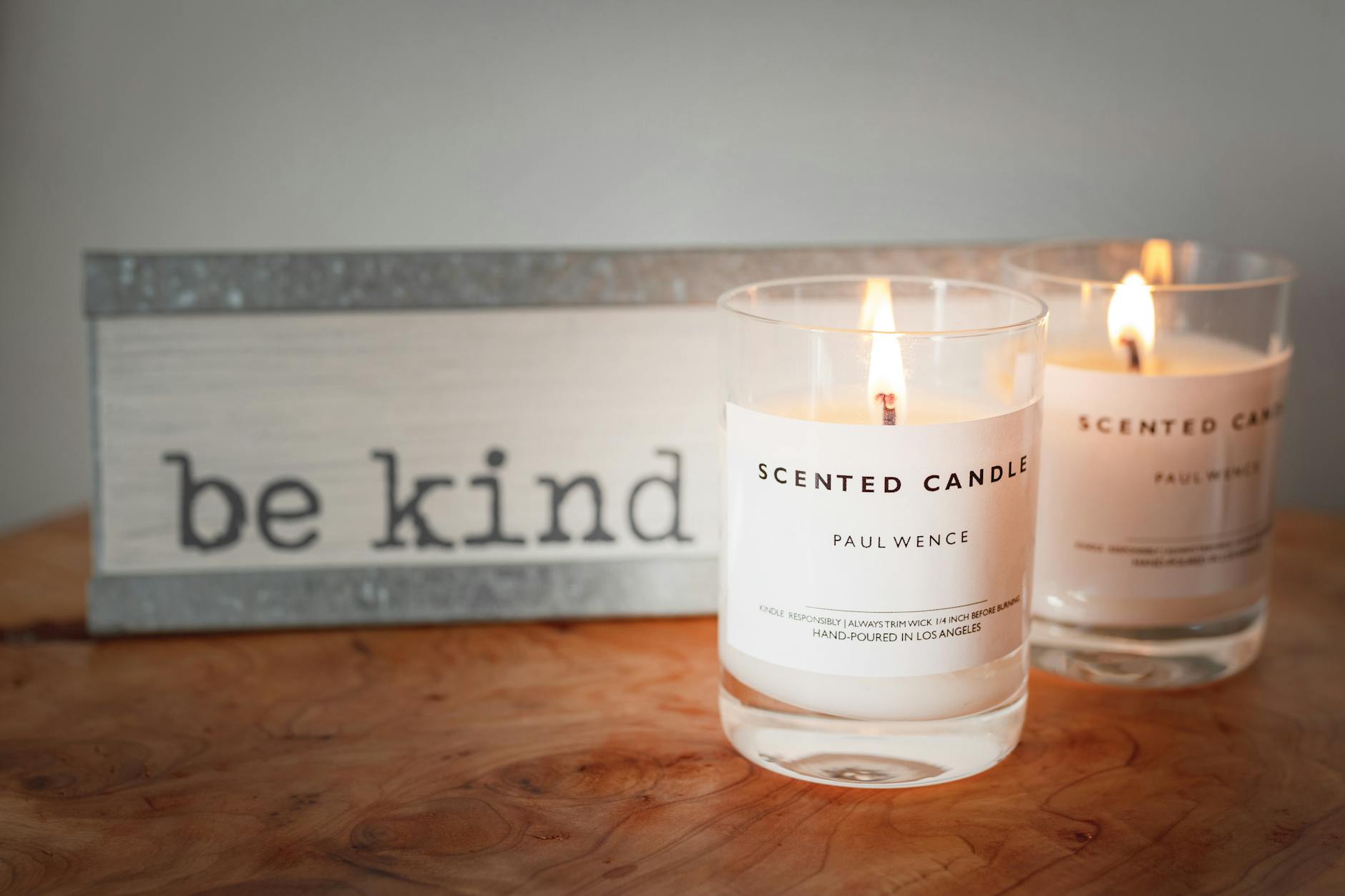
Sandalwood and cedar is a combination that doesn't try to impress you immediately. It settles in. The warmth builds slowly, the woodiness sharpens, and within a few minutes the room feels different in a way that's hard to put into words but easy to notice. That's the mark of a well-constructed wood pairing, and this one is among the best in luxury candle fragrance.
Why these two woods belong together
Sandalwood and cedar are both wood-derived scents, but they work differently on the nose. Sandalwood is smooth and creamy, with a faint sweetness that keeps it from feeling heavy. Cedar is drier and sharper, with a pencil-shaving quality that adds definition. Together, they create a full-bodied warmth without tipping into sweetness or becoming too austere.
Perfumers call this kind of pairing a "woody accord." It anchors other notes around it. That's why sandalwood and cedar appear so often in the base of complex fragrances: they hold the whole structure together while being perfectly satisfying on their own. In a candle context, that steadiness translates into a scent that doesn't distract. It complements a space rather than competing with it.
Cedar is also a natural fixative. It extends the life of the fragrance on the nose, which means a sandalwood-and-cedar candle tends to feel present in a room longer than lighter, citrus-led options.
How the scent behaves as a candle burns
A good sandalwood and cedar candle changes across its burn. In the first 20 minutes, you'll notice the cedar more prominently. It's the quicker-diffusing note, and it announces itself cleanly. As the wax pool deepens and the temperature stabilises, the sandalwood rises. That's when the creaminess appears and the combination locks into place.
This evolution is one reason the pairing works so well for evening use. It has a natural rhythm that mirrors winding down. The cedar clarity gives way to sandalwood warmth, and the room shifts with it. If you've explored vanilla and amber as a warmth-driven pairing, you'll find sandalwood and cedar sits in adjacent territory but reads as drier, more textural, and less sweet.
Burn time matters here. Shorter burns (under 2 hours) won't give the sandalwood enough time to fully develop. Aim for at least 2.5 hours to experience the full arc of the pairing.
What to look for in a sandalwood and cedar candle
Not all sandalwood is the same. The most prized variety, Australian sandalwood, is harvested sustainably and carries a rounder, slightly nuttier character than its Indian counterpart. Indian sandalwood (Mysore) is richer and more intensely creamy, though it's also significantly rarer and more expensive. Either can anchor a candle beautifully; what matters is that the formulation uses a decent concentration rather than a token drop of fragrance oil stretched over a large wax volume.
For the cedar component, look for Virginian cedarwood or Atlas cedarwood in the listed notes. Both are warmer than the sharper, more medicinal pencil cedar. Virginian in particular blends cleanly with sandalwood without either note overpowering the other.
Wax type also shapes how these notes project. Coconut wax and soy wax both carry wood fragrances well, giving a cleaner throw than paraffin. If a candle smells strongly of sandalwood and cedar in the jar but fades quickly when burning, the wax-to-fragrance ratio is the likely cause.
Rooms and occasions that suit this pairing
Sandalwood and cedar works in almost any room, but it performs best in spaces where you want presence without intensity. A study, a bedroom, a sitting room in the evening: all natural fits. It's a grounding scent rather than an energising one, so it's less suited to kitchens or workspaces where you want mental sharpness.
Seasonally, the pairing peaks in autumn and winter. The dryness of cedar and the warmth of sandalwood suit cooler, darker months in a way that lighter blends don't. That said, it's not a scent that disappears in warmer weather. A cooler burn in a well-ventilated room on a summer evening can feel equally satisfying.
If you enjoy lavender and sage as a grounding fragrance, sandalwood and cedar occupies a similar emotional register, though it replaces the herbal freshness with pure wood warmth. The two styles complement each other well across different rooms of the same home.
Pairings within pairings
Sandalwood and cedar is a complete fragrance on its own, but it also accepts other notes gracefully. Vetiver deepens the earthiness. Black pepper adds a sharp edge. A touch of bergamot lifts the top of the scent without disturbing the wood base. Some candle makers add a trace of leather or tobacco for a more masculine, library-like quality.
What the pairing doesn't need is heavy florals or loud citrus. Those additions pull in different directions and fracture the cohesion that makes sandalwood and cedar so satisfying. The best versions of this scent keep the ingredient list short. Three or four notes, each doing a specific job, burn better than a crowded formula trying to be everything.
If you find a sandalwood and cedar candle that gets the balance right, it's worth keeping two on hand. These aren't impulse-purchase candles. They're the ones you light deliberately, and the room knows the difference.