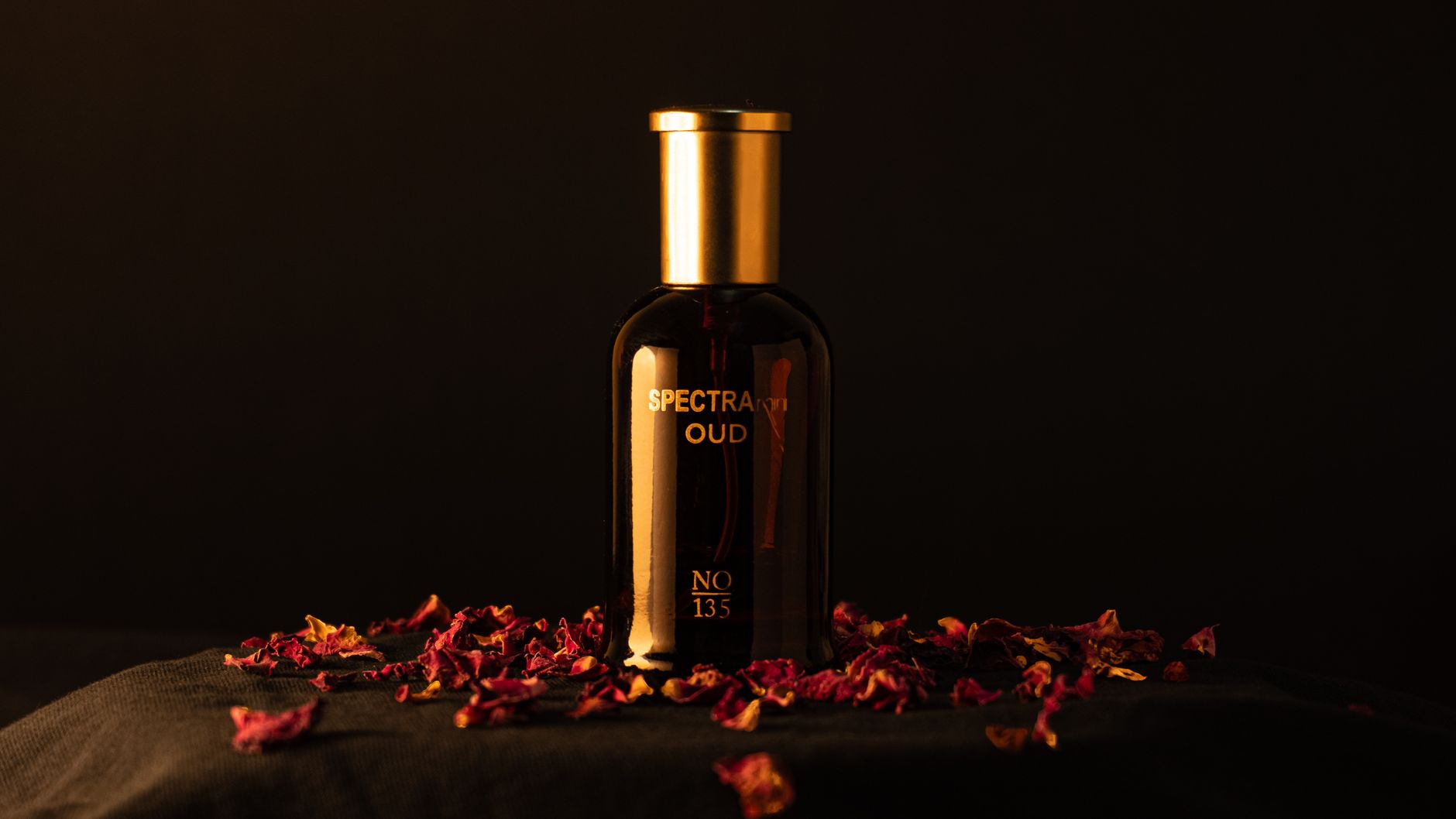
Rose and oud is one of the most revered scent pairings in perfumery, and for good reason. It brings together two ingredients that shouldn't logically work together and yet do so completely: the tender, almost melancholy sweetness of rose petals and the dark, smoky intensity of oud resin. In a candle, that tension becomes a slow, rich presence that changes the feeling of a room. It doesn't just smell good. It shifts the atmosphere.
What oud actually is
Oud, also called agarwood, comes from the resin that forms inside Aquilaria trees after they become infected with a specific mould. The resin develops over years, sometimes decades, and the resulting wood is one of the most expensive raw materials in perfumery. The scent is hard to describe without smelling it: woody and animalic, with a smoky, almost leathery edge. It reads as ancient. Serious.
Because genuine oud is so costly, most candle makers use a synthetic agarwood accord. Good synthetic oud still carries depth and warmth. It just tends to sit closer to the wood side and further from the animalic edge. For a home fragrance context, that's often a better fit anyway.
Why rose works with oud
Rose is the natural counterpoint. It adds lightness without going sweet in a candied way. The floral note lifts the oud's density, and the oud in return gives the rose something to lean against. Without the oud, rose can read as pretty but thin. Without the rose, oud can feel heavy and austere. Together, they create a fragrance with real structural interest: something opens soft and blooms into depth.
This is the same logic behind pairing sandalwood and cedar, where two woody elements balance each other through contrast in texture. Rose and oud works on a similar principle, just with a much wider tonal gap between the two notes, which is part of why the result feels so striking.
The pairing also reads differently across seasons. In cooler months, the oud dominates and the candle feels grounding and warm. In summer, the rose comes forward and the whole thing feels less heavy. One candle, genuinely different moods.
How to read a rose and oud candle label
Not every candle marketed as rose and oud delivers the same result. A few things to look for:
- Wax type. Soy and coconut wax carry floral and resinous notes differently from paraffin. Soy tends to give a cleaner, cooler rose; coconut wax adds a creaminess that suits oud's warmth.
- Fragrance load. A higher fragrance-to-wax ratio (typically above 10 percent) means a stronger throw. Rose and oud needs enough intensity to project, or the oud disappears into the background entirely.
- Note breakdown. Some candles list rose as a top note and oud as a base, which means the opening burn smells more floral before the resin deepens. Others blend them evenly throughout. Neither is wrong, but knowing which you're getting sets expectations.
Burn time and scent throw
Rose and oud candles tend to be positioned in the premium tier, and that typically means a longer burn time: 50 to 70 hours for a 300g candle is reasonable. Scent throw varies a lot by brand. Because oud is a heavy molecule, it lingers in a room even after you extinguish the candle. That persistence is part of the appeal. The scent doesn't disappear in ten minutes.
For context, lighter pairings like lavender and sage tend to diffuse quickly and cleanly. Rose and oud does the opposite: it settles and stays, and the room often smells faintly of it the next morning. Some people find that lingering quality luxurious. Others find it too much for a bedroom or small space. It's a candle better suited to a living room or hallway than a bathroom.
Pairing rose and oud with other scents
If you burn multiple candles in rotation, rose and oud sits well alongside vanilla and amber. Both lean warm and resinous, but vanilla and amber is sweeter and more approachable. Alternating between the two across different evenings gives you warmth without repetition.
Rose and oud clashes with anything sharp or citrus-forward. Don't pair it with a lemon verbena or a green fig candle in the same room. The contrast is too jarring and the oud reads muddy rather than deep.
What to look for in a luxury rose and oud candle
The best versions of this scent don't smell like a perfume counter. They're less literal. The rose isn't a florist's shop and the oud isn't incense smoke. The best candles use the two notes as a foundation and build something that feels original. Look for fragrance houses that describe the accord in terms of wood, petal and resin rather than just listing the two ingredients and calling it done.
Diptyque and Byredo both produce rose-and-oud adjacent candles worth comparing if you want a reference point for what a well-executed version of this pairing can do. They handle the balance differently, which is instructive. Diptyque tends to lean floral; Byredo pushes the resin harder. Your preference between them tells you a lot about where you want the emphasis to sit.
Rose and oud rewards patience. Burn it for the full two hours the first time, let the melt pool reach the edges, and give the scent ten minutes to fully open before you judge it. On first light, the rose leads. Then the oud arrives.